
Genesis 21: Who Gets to Laugh? Who Gets to Drink?
Evergreen — a developed piece
Part 1: Brothers Become Strangers
Sarah finally has a son.
At ninety years old, what she thought was completely impossible is suddenly toddling around. They call him Isaac, “he will laugh”, and you can imagine his little laugh is like music to her soul.
Then she notices who is making him laugh. It’s Ishmael. The son of that foreign woman Hagar.
(Your translation may say mocking but the Hebrew is actually more like “making laughter” clearly a deliberate mirror to Isaac’s name. Sometimes our translations try to rescue our heroes rather than letting the awkwardness come through.)
What seemed like a good idea once - bringing Hagar into the story — now feels like a problem. Ishmael is older, getting stronger, technically the firstborn. She starts to picture him as a threat to Isaac, to her place, to the promise.
Brene Brown discusses the concept of forboding joy - the sense that comes with joy that its days are numbered and when we feel that insecurity, we can start seeing threats everywhere we look. She writes: “Every time I came too close to softening into sheer joyfulness about my children and how much I love them, I’d picture something terrible happening; I’d picture losing everything in a flash.” (Brene Brown, The Gifts of Imperfection)
When Sarah says: “The son of this slave woman will not inherit with my son Isaac”. The subtext is “I’m the chosen one. This is for us. Not for them.”
Sarah sees flourishing as a zero - sum game and so Ishmael and Hagar are sent out of the camp into the desert.
I wonder is there someone you worry might steal your place of authority or blessing? Maybe a gifted young colleague? Or a rival candidate for a promotion? or a nearby church with better music or a charismatic leader?
Part 2: God Hears the Cries of the Child.
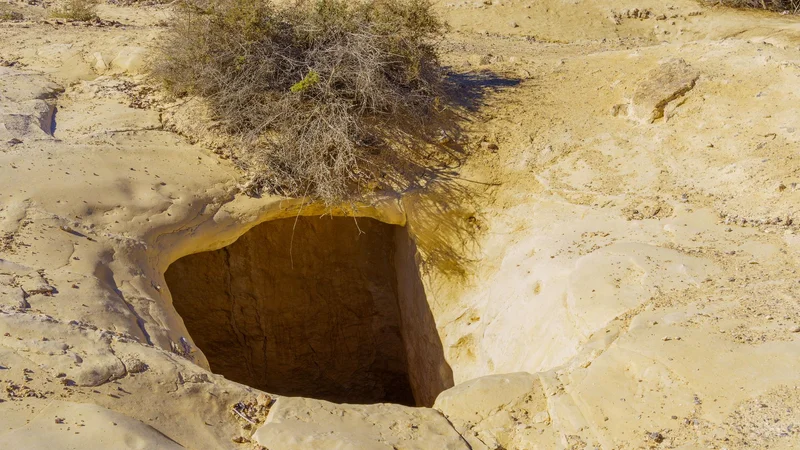
Hagar and Ishmael are sent off into the desert with some bread and a skin of water. When the water runs out, Hagar puts Ishmael under a bush and walks away because she can’t bear to watch him die. He cries. She sobs from a distance. But then… ואתא
“God heard the boy crying.”
Note God’s preferential option for the poor at work: When hagar was alone, God saw her. When the boy is the most vulnerable, God heard his cry.
God speaks to Hagar, tells her not to be afraid, and opens her eyes to see a well that was already there in the desert of Beersheba – the “well of seven / promise / completeness”. And Here God’s promise is fulfilled. Because he didnt need Abraham in order to bless the nations. He invited his people to join his mission, but they decided to cast the nations out instead. And just as God Promised, Ishmael is not just saved but becomes the father of a whole nation.
The Rainbow Connection
There are two slightly odd references to a Bow in this section. Hagar walks a bow-shot away from Ishmael and Ishmael became “good with the bow”. You end up with this image: a boy pushed out of the house of promise, saved from calamity and then handed a bow. The author of Genesis isnt being subtle here. We are supposed to be reminded of the God who has hung up his own bow after Noah’s flood as a promise that he won’t give up on the world. (Genesis 6)
Part 3: Abraham and Abimelech: Strangers become Brothers
Next we’re suddenly in what feels like a completely different story. But watch this. The genius author of Genesis is doing something masterful.
Abimelech, the local boss, turns up with his intimidating bodyguard. Given Abraham’s track record of lying to Abimelech about Sarah to save his own neck, this could easily be the moment everything blows up.
But Abimelech opens with: “God is with you in everything you do.” He’s not there to kick Abraham out. He wants a covenant of honesty and kindness.
Abraham, never one to keep things simple, does something stupidly risky. He brings up his own beef: a well he dug has been seized by Abimelech’s servants. This is the kind of thing you usually keep quiet about when a big guy with a sword has just offered you an olive branch.
But Abimelech, miraculously, Is happy to sort it out and they make a covenant. Moving from strangers to brothers.
This is the alternative story to casting out Hagar and Ishmael. Instead of turning brothers into strangers, Abraham forms a covenant. And as a result we see people, a well and a Tree (As per usual its all about Trees)
Two stories at the same well
If you put the two Beersheba scenes side by side, a pattern starts to show.
- At Beersheba, a boy and his mum are sent away from the family of promise. Brothers become strangers. God meets them there anyway.
- At Beersheba, a wandering herdsman and a local king make a covenant over a disputed well. Strangers become brothers. Their people share the space.
In both stories, God brings Eden-shaped restoration. The Question is are the people of God prepared to get with the program?
Same place. Same God. One story full of separation and rejection. Another full of tentative trust and shared blessing.
The ground that holds the pain also holds the possibility of peace.
Wells, fear, and blessing
None of this is just abstract or ancient. The dynamics are uncomfortably familiar.
-
There is Sarah’s fear: when the good thing we’ve been given makes us weirdly anxious about other people who might “take” it – newcomers, younger leaders, people who just do stuff differently and unsettle our sense of status.
-
There is Ishmael’s hurt: the experience of being marginalised by the people of God when you become inconvenient or undesirable for what they see mistakenly see as their mission.
-
There is Abimelech’s Collaboration: Where we Choose to partner with those around us, regardless of religion or any other marker of difference. Maybe this leads to the recognition - “God is with you in everything you do”.
Genesis 21 won’t let the promise of God shrink down to one clean bloodline or one tidy community. It shows a God who confronts fear when it pushes others away, and who also walks out into the desert to find the ones who’ve been pushed there.
I think God is doing miracles when insiders and outsiders, Christians and not, locals and foreigners, actually manage to stand at the same well and say, “Let’s build something together.”
- Where do you see the children of God refusing to collaborate with others out of fear?
- What would it take, in that particular spot, for neighbours to become brothers, collaborating with each other and being the channels of God’s promise of restoration?
Lord, make me channel of your peace:
where there is hatred, let me sow love;
where there is injury, pardon;
where there is doubt, faith;
where there is despair, hope;
where there is darkness, light;
where there is sadness, joy.O divine Master, grant that I may not so much seek
to be consoled as to console,
to be understood as to understand,
to be loved as to love.For it is in giving that we receive,
it is in pardoning that we are pardoned,
and it is in dying that we are born to eternal life.
Amen.
- The Prayer of St. Francis